
Reviewed · PRIVATE DRIVERS & DAY TOURS
2 Hours Private Scooter Lesson in Bali
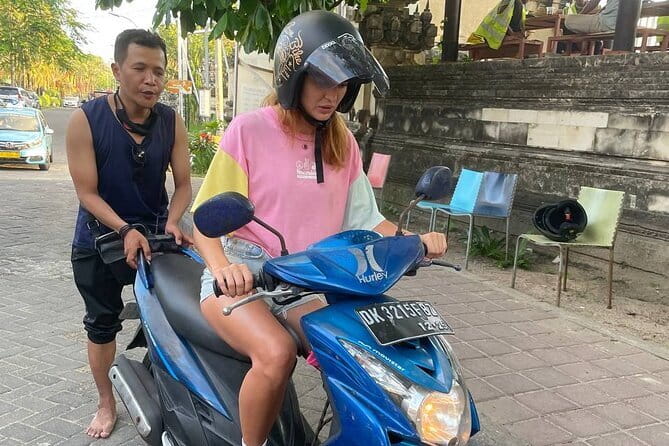
Your first scooter ride in Bali can feel doable. A private 2-hour lesson in Kuta turns traffic stress into clear, teachable skills, with pickup from areas like Seminyak, Sanur, and Denpasar. I especially like how the session starts with practical coaching instead of leaving you to figure things out on your own.
I also really liked the focus on real-world riding habits, including defensive riding guidance modeled after the way Gojek drivers are taught. You don’t just learn buttons and balance—you learn how to approach intersections and how Bali riding culture works, then you build toward practice on a quieter village street.
One thing to consider: at $31 for a private session for up to 1 person, it’s best if you’re genuinely planning to rent and ride soon. If you already feel fully comfortable on scooters in heavy traffic, the value may feel smaller.
In This Review
- Key Things I’d Watch For Before Booking
- A 2-Hour Lesson Beats Learning Bali on Hard Mode
- Pickup From Your Area to a Safe Place to Practice
- Theory That Actually Supports Your First Minutes on the Scooter
- The Core Skills: Acceleration, Balance, Turning, Braking
- Intersections and Main Roads: Learning Safer Habits in Bali Traffic
- Bali Riding Culture: What You Need to Know Before You Blend In
- The Best Moment: From Open Lot Practice to Quiet Village Street
- Instructor Style Matters: Patient Coaching From Iqbal and Chris
- Price and Value: $31 for a Private Lesson for Up to 1
- Logistics in Kuta: Mobile Ticket, Start Location, and Weather Timing
- Who Should Book This Scooter Lesson (And Who Might Skip It)
- Should You Book This Bali Scooter Lesson?
- FAQ
- How long is the scooter lesson?
- Is this lesson private?
- What areas in Bali do you pick up from?
- Where is the meeting point?
- What happens during the lesson?
- Do you practice on real streets or only in an open area?
- What does the price include?
- Is there anything I need to do for confirmation?
- What if the weather is bad?
- Do I need a certain fitness level?
Key Things I’d Watch For Before Booking
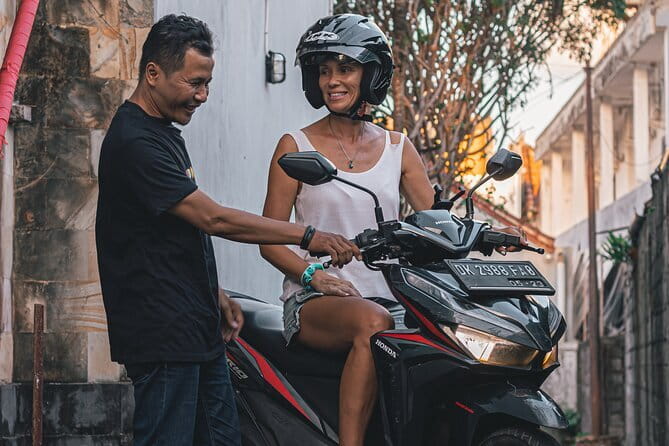
- Private, up-close coaching: Only your group rides with the instructor, so you get more feedback than in any shared class.
- Pickup across Bali hot spots: Kuta, Seminyak, Jimbaran, Uluwatu, Sanur, and Denpasar are covered.
- Step-by-step control training: Acceleration, balance, turning, and braking are taught through drills.
- Intersection and main-road safety focus: You get tips aimed at riding more confidently where cars and scooters mix.
- Practice progresses to real streets: You start in an open area, then move to a quiet village street once you feel ready.
- Common stress gets handled: From anxiety to confidence is a recurring theme in how the lesson is described.
A 2-Hour Lesson Beats Learning Bali on Hard Mode
Bali roads can be friendly, but they can also be intense—fast decisions, lots of scooters, and intersections that don’t behave like the ones at home. If you plan to rent a scooter, learning the basics with an instructor first is one of the smartest ways to protect your time, your confidence, and your wallet.
What makes this lesson work is that it’s built for the first moment you’re actually riding. You start with the mechanics, then you practice the physical skills that keep you steady. After that, the instruction shifts to safety habits for busier areas, with guidance tied to the real rhythm of Bali traffic.
This is also why I like the private setup. When you’re the only student, you can ask questions without feeling rushed. You can also stop and reset if something feels off—especially helpful when you’re learning balance and braking.
More private-driver days you can shape around Kuta
Pickup From Your Area to a Safe Place to Practice
Your lesson begins with pickup in several well-traveled areas: Kuta, Seminyak, Jimbaran, Uluwatu, Sanur, and Denpasar. That matters because Bali is spread out. If you had to make your own way to a training spot, you’d burn energy before you even start learning.
The practical training location is typically a wide, open area nearby—often something like a parking lot or an empty field. That setup is ideal at the beginning. It gives you space to learn without the constant pressure of traffic swirling around you.
You’ll also return to the meeting point at the end. The meeting point is listed as Airport Scooter Lesson, Jl. Mataram, Kuta, Kec. Kuta, Kabupaten Badung, Bali 80361, Indonesia. Having the session loop back there keeps the plan simple and predictable.
Theory That Actually Supports Your First Minutes on the Scooter
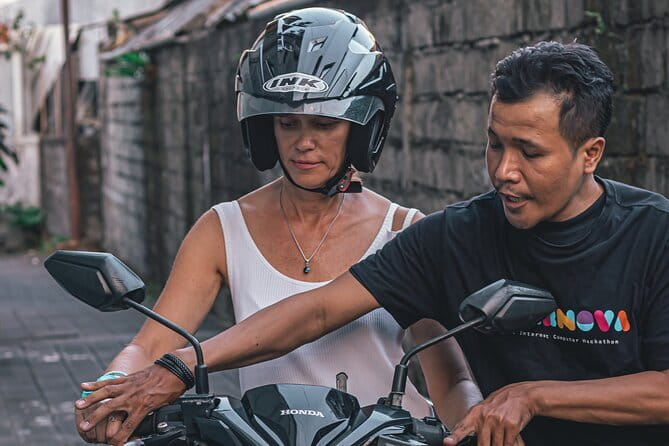
Most scooter lessons fail because they skip the part you need most: understanding the machine before you ask it to move. Here, the instructor starts with a brief theoretical session that explains how the scooter works and what each component does.
That might sound basic, but it’s the difference between feeling lost and feeling in control. When you know what you’re looking at—how to start, how the bike responds when you accelerate, and how braking works—you can focus on steering and balance instead of panic-scanning the scooter like it’s a mystery device.
Then you move from theory to drills. The lesson doesn’t keep you stuck reading your way through the basics. It gets you moving fast, with structured practice that builds from simple control to more complicated street behavior.
More hands-on Balinese workshops and classes
- Bali: Seminyak Silver Jewelry-Making Class★ 4.9 · 129 reviews
- Bali: Silver Class in Kuta With Optional Tour And Activities★ 4.9 · 98 reviews
- Chef Bagus Balinese Indonesian Food Cooking Class★ 5.0 · 89 reviews
- Kuta Bali Silver Jewelry Making Class Near Kuta Beach★ 5.0 · 57 reviews
- Bali: Silver Jewelry Making Class in Seminyak and Legian★ 5.0 · 46 reviews
The Core Skills: Acceleration, Balance, Turning, Braking

The heart of this lesson is hands-on practice. You’ll go through exercises designed to build the muscle memory that makes riding feel normal.
Here’s what you should expect to drill during the session:
- Acceleration practice: getting comfortable with throttle response so you can move smoothly instead of jerking forward.
- Balance exercises: staying steady at low speed, where most first-timers wobble.
- Turning basics: understanding how to change direction without overcorrecting.
- Braking control: learning how to slow down confidently and predictably.
These drills matter because Bali traffic demands smoothness. A scooter that feels skittish in an empty lot will feel chaotic on a road. The training goal is to help your body learn the bike’s “language” so you aren’t fighting it while you also watch what traffic is doing.
And the lesson is designed to progress. You don’t jump straight to stress. You build the skills in the order that helps your confidence.
Intersections and Main Roads: Learning Safer Habits in Bali Traffic
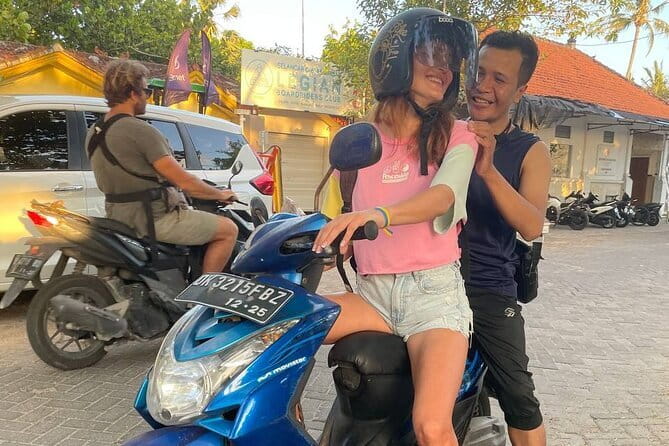
Once you’ve got basic control, the instructor shifts into the safety side. You’ll get crucial knowledge and tips for riding more confidently on main roads, including how to handle intersections.
Intersections are where new riders usually get overwhelmed. It’s not just turning—it’s timing, spacing, and scanning for what other scooters and cars will do next. The lesson’s approach focuses on giving you a method, not just telling you to be careful.
A key element is the defensive riding standard used in instruction for Gojek drivers. You’re not being trained to ride aggressively. Instead, you’re taught to ride with the assumption that other drivers might not always move the way you expect.
If you’ve ever felt like Bali traffic is a guessing game, this is the part that helps you turn guessing into strategy. You learn how to think while you ride, not just how to operate the scooter.
Bali Riding Culture: What You Need to Know Before You Blend In
Bali has its own rhythm. Even if you can drive a scooter mechanically, you still need to understand how the traffic flow tends to work and what riding culture looks like on the ground.
During this lesson, you’ll be taught about distinct riding culture in Bali and how it can differ from other places. That usually translates to practical expectations: where attention needs to go, how riders communicate through movement, and why defensive habits are so important here.
This cultural part is easy to underestimate. But it’s often what separates a rider who can operate a scooter from a rider who can actually feel comfortable riding among others.
The Best Moment: From Open Lot Practice to Quiet Village Street

The lesson isn’t one continuous test of nerves. It follows a safe progression.
You’ll first practice in a wide open area like a parking lot or empty field. That’s where you build control. After that, you practice in a quiet village street once you feel completely at ease and confident.
That “only when you’re ready” progression is a big deal. It means the instructor doesn’t throw you into real streets before your braking and turning are reliable. You get time to build confidence, then you get the payoff: the feel of riding in a real street environment.
In my view, this is one of the best ways to reduce the scary jump from lesson to rental. Instead of going from an instructor’s guidance straight into busy roads, you get a middle step.
Instructor Style Matters: Patient Coaching From Iqbal and Chris

Two instructor names show up clearly in the teaching style people appreciated: Iqbal and Chris.
Iqbal is described as patient and thorough, explaining everything from starting the engine to navigating intersections in Bali traffic. That’s exactly what you want in a first lesson: calm explanations that match your pace.
Chris is also called out as excellent and patient, helping a rider go from anxiety to confidence within two hours. That tracks with what the lesson is trying to do: reduce fear early, then build skill fast.
Now, instructors can vary. But the repeated message is consistent: you’re taught in a way that helps you understand, not just follow instructions.
Price and Value: $31 for a Private Lesson for Up to 1
Let’s talk value honestly. $31 sounds cheap on the surface, but the real question is what you get for that money.
You’re not paying for a long lecture. You’re paying for:
- direct coaching on scooter control skills
- safety tips for main roads and intersections
- guided practice that moves from open space to a quiet street
- a private setup, which means you aren’t competing for attention
The pricing can feel especially good if you’re a solo rider. You’re paying per group (up to 1), so you’re not sharing the lesson time with strangers.
Is it overpriced for experienced riders? If you’re already fully comfortable with scooter balance, turning, and braking in traffic, you might decide you don’t need this. But if you’re new to scooters or new to Bali roads, the cost can pay off fast by preventing a shaky start to your scooter rental.
My rule of thumb: if you plan to ride at all, a short lesson is often cheaper than replacing a stressed-out day with a cautious restart.
Logistics in Kuta: Mobile Ticket, Start Location, and Weather Timing
This activity includes a mobile ticket, and you should receive confirmation at the time of booking. Pickup is offered across several areas, but the session always ties back to the Kuta meeting point on Jl. Mataram.
Timing is listed as about 2 hours, so plan for a compact, focused session rather than a full half-day activity.
Weather matters here. The experience requires good weather. If conditions are poor, you’ll be offered a different date or a full refund. That’s important on Bali, where rain can turn practice into slip-and-survive.
Who Should Book This Scooter Lesson (And Who Might Skip It)
This lesson makes the most sense if:
- you’re going to rent a scooter soon and want fewer surprises
- you’re nervous about riding in heavy traffic
- you want step-by-step help with balance, braking, turning, and acceleration
- you need guidance on intersections and riding confidently on main roads
It may be less helpful if you:
- already ride scooters confidently in traffic
- want a long guided ride tour rather than short training drills
- have limitations that make physical control practice difficult (the lesson notes moderate physical fitness)
The private structure helps a lot if you learn best when you can ask questions and repeat movements.
Should You Book This Bali Scooter Lesson?
If you’re considering scooter rental in Bali, I’d strongly consider booking this first. The lesson does the right things in the right order: theory that explains the machine, drills that build control, safety guidance for main roads and intersections, and then a gentle step onto a quiet village street once you’re ready.
Skip it only if you’re already comfortable riding in similar traffic and you don’t need help with balance, braking, turning, or intersections. Otherwise, this is exactly the kind of short, focused training that can turn Bali roads from intimidating into manageable.
FAQ
How long is the scooter lesson?
The lesson lasts about 2 hours.
Is this lesson private?
Yes. It’s a private tour/activity, and only your group participates.
What areas in Bali do you pick up from?
Pickup is offered from Kuta, Seminyak, Jimbaran, Uluwatu, Sanur, and Denpasar.
Where is the meeting point?
The meeting point is Airport Scooter Lesson, Jl. Mataram, Kuta, Kec. Kuta, Kabupaten Badung, Bali 80361, Indonesia.
What happens during the lesson?
You’ll start with brief theory about scooter mechanics, then practice acceleration, balance, turning, and braking. You’ll also get safety tips for riding confidently on main roads, including intersection guidance, and then practice on a quiet village street once you feel ready.
Do you practice on real streets or only in an open area?
You begin in a wide open area nearby (like a parking lot or empty field). After you feel comfortable, you progress to practicing on a quiet village street.
What does the price include?
You pay $31 per group (up to 1). The experience includes pickup, the lesson instruction, and a mobile ticket.
Is there anything I need to do for confirmation?
You receive confirmation at the time of booking.
What if the weather is bad?
The experience requires good weather. If it’s canceled due to poor weather, you’ll be offered a different date or a full refund.
Do I need a certain fitness level?
You should have a moderate physical fitness level.
A Spare Two Hours
- Seminyak: 2-Hour Surf Lesson in Seminyak for All Levels
★ 4.9 · 83 reviews - Traditional Bali Massage Lulur & Spa Treatment 2 Hours
★ 5.0 · 47 reviews - Bali: Seminyak Beach Surf Lesson Experience 2 Hour
★ 4.9 · 20 reviews - Kuta Surf Lessons : 2-Hour Surf Lesson
★ 4.9 · 13 reviews - eBike Private Beach Tour Express (2 Hour)
★ 5.0 · 10 reviews
More Bali Workshops and Classes
- HOT PROMO. Beginner Surf Lessons in Bali
★ 5.0 · 193 reviews - Surf Lesson with a Personal Instructor at Kuta Beach
★ 4.5 · 192 reviews - The best surf lessons in Kuta
★ 5.0 · 144 reviews - Bali: Seminyak Silver Jewelry-Making Class
★ 4.9 · 129 reviews - Kuta-Bali : Private Surf Lesson With Surf photos & Videos
★ 4.9 · 112 reviews
Plan One More Day with a Driver
- Bali Nusa Penida West Private All-Inclusive Tour
★ 5.0 · 1,277 reviews - Mount Batur Sunrise Trekking Private Tour with Breakfast and Hotel Transfer
★ 5.0 · 885 reviews - Individual Bali Day Trip with Private Driver and Free WiFi
★ 5.0 · 755 reviews - Private Tour Mount Batur Sunrise Trekking and Natural Hot Spring
★ 5.0 · 431 reviews - Best bali transport service – custom your own itinerary
★ 5.0 · 363 reviews
Fresh on the Kuta Travel pages






Private Drivers & Day Tours, compared.
 ★ 5.0️ Bali Instagram Tour: The Most Famous Spots (Private & All-Inclusive)From $1142,857 reviews
 ★ 5.0Bali Nusa Penida West Private All-Inclusive TourFrom $801,277 reviews
 ★ 5.0Nusa Penida Snorkeling Adventure (Private & All-Inclusive)From $1291,197 reviews
 ★ 5.0Mount Batur Sunrise Trekking Private Tour with Breakfast and Hotel TransferFrom $49885 reviews
 ★ 5.0Individual Bali Day Trip with Private Driver and Free WiFiFrom $38755 reviews
 ★ 5.0Private Tour Mount Batur Sunrise Trekking and Natural Hot SpringFrom $63431 reviews
 ★ 5.0Private Tour Bali Beaches and Uluwatu Temple with DinnerFrom $48363 reviews
 ★ 5.0Best bali transport service – custom your own itineraryFrom $64363 reviews
Browse the lists this tour appears in