
Reviewed · KUTA SURF LESSONS
Private Surf Lesson
First-wave nerves melt fast here. A private surf lesson at Legian Beach (Kuta), run by Rip Curl School of Surf, turns a shaky first attempt into an organized, coached skill session. I like that the teaching starts with fundamentals and safety, then quickly gets you into the water to work on real wave riding. I also like the practical extras included, from full gear to fresh showers and lockers, so you’re not hunting for anything after you wipe out.
The one catch: the start is early (8:00 am), and pickup only works within the coverage area. If your hotel is just outside that zone, or if you don’t confirm your pickup point in advance, the timing can get annoying fast.
In This Review
- Key things you’ll notice right away
- Why a private surf lesson at Legian Beach is such a smart move
- Meeting at 8:00 am: pickup, location, and how the gear stage works
- The 90-minute flow: from theory to beach practice
- Paddling, pop-up, stance: the fundamentals that make the rest possible
- Paddling
- Pop-up timing
- Wave riding stance
- Turning on the wave: bottom turns and cutbacks (without overcomplicating it)
- Beach breaks, reef options, and safety you can actually use
- What’s included (and why it matters more than you think)
- Full equipment, not just a board
- Rash guard, leggings, and zinc
- Showers and towels
- Liability insurance
- Price and value: is $84.28 worth it?
- Who should book this lesson, and who should reconsider
- The bottom line: should you book Rip Curl School of Surf in Kuta?
- FAQ
- Where is the surf lesson meeting point?
- What time does the private surf lesson start?
- How long is the lesson?
- Is pickup included?
- What surf equipment is included?
- Do I need to bring anything?
Key things you’ll notice right away
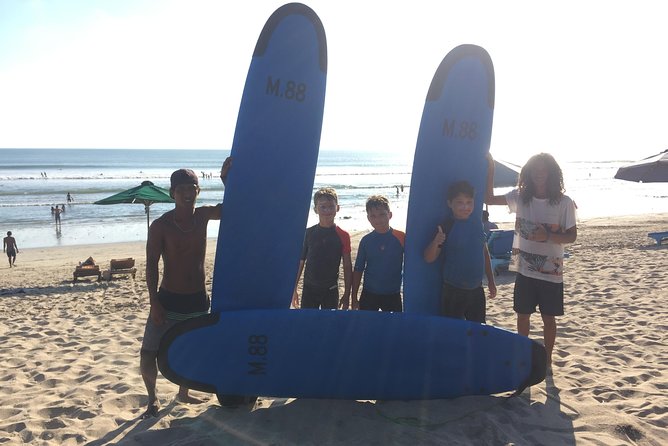
- One instructor, one student setup that lets coaching match your exact level and pace
- All surf equipment included, plus a rash guard and leggings for less sun burn risk
- A clear skill path: paddling, pop-up, stance, turning, and riding beach-break waves
- Ocean knowledge and safety built in, not tacked on at the end
- Reef trip possibility (with reef booties and a reef boat in Sanur, if conditions and level allow)
- On-site showers, lockers, and changing rooms, so you can exit the beach day clean
Why a private surf lesson at Legian Beach is such a smart move
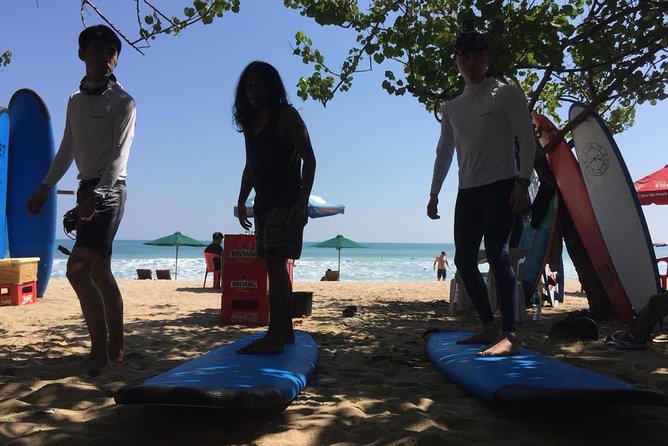
A private lesson costs more than a group class, but the value is easy to see when you’re the only person in the lineup. With one instructor watching your form the whole time, you get faster feedback. That matters most at the early stages: the pop-up timing, where your weight goes, how your board angle sets up your turn, and how you recover after each miss.
Legian Beach is also a good choice for learning. You’re at Kuta’s surf zone, close enough to get into the water without turning the day into a logistics project. And because the lesson is structured around beach-break comfort, you’re not thrown into a random situation. The goal is to get you confident in the ocean and surfing with correct etiquette, not just chasing waves and guessing.
I especially like that the coaching targets more than standing up. The lesson focuses on technique you can repeat: catching more waves, perfecting your bottom turn, and working toward faster cutbacks as you progress.
More beginner surf lessons along the Kuta and Legian sand
Meeting at 8:00 am: pickup, location, and how the gear stage works
Your lesson starts at Legian Beach (the meeting point) at 8:00 am, and it ends back at the meeting point. The session duration is about 1 hour 30 minutes, so you’ll want to treat this like a focused morning outing, not a casual “whenever” hang.
If your hotel is within the pickup coverage area, transport is included. You’ll need to share your pickup location when the schedule gets confirmed (the timing is set one day in advance). The practical point here is simple: confirm early, be ready on time, and keep your location details clear.
Once you’re there, the school supplies the stuff that usually slows people down:
- Surfboard and leg rope
- Surf helmet
- Reef booties during reef trips (if they happen)
- Imported zinc
- A Rip Curl rash guard and leggings
- Bottled water
You also get private changing rooms and lockers, plus shower facilities with soap and shampoo, and a towel. That’s not a “nice-to-have.” After a saltwater session, it’s the difference between feeling fresh enough for the rest of your Bali day and spending the afternoon smelling like the ocean.
The 90-minute flow: from theory to beach practice
This lesson is built as a short, high-clarity progression. The structure you should expect is:
1) quick assessment of your ability
2) fundamentals and safety basics
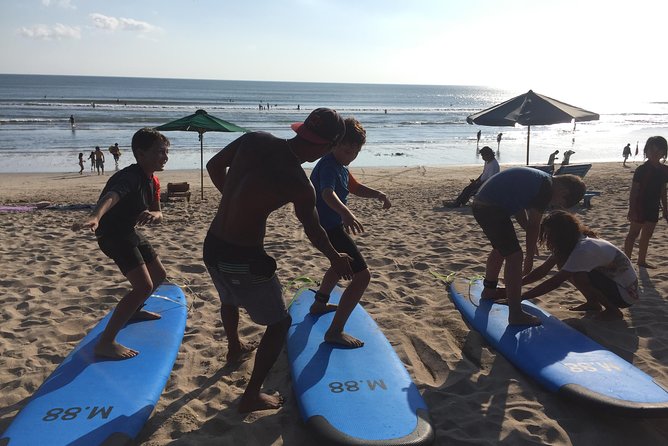
3) practice of core skills in the beach zone
4) actual wave riding (within the lesson focus)
Even though it’s only about an hour and a half, it’s not random. The syllabus covers the basics you need to ride waves: paddling, popping-up, and your wave riding stance. Then it moves into how to turn your board on the wave, plus ocean knowledge and safety.
For first-timers, the big payoff is how much gets corrected early. Instead of spending your time learning the hard way, you get guidance on the mechanics that let you pop up without fighting gravity. For improving surfers, you’ll still benefit because private coaching can target the exact weak link: wave selection, body position during the turn, or how you set up for the next maneuver.
This is also where surfing etiquette gets handled. You’ll learn how to behave in the lineup so you don’t become the chaos factor for everyone else. Think: how to enter, where to position yourself, and how to avoid risky situations with other surfers.
More private-driver days you can shape around Kuta
- Mount Batur Sunrise Trekking Private Tour with Breakfast and Hotel Transfer★ 5.0 · 885 reviews
- Individual Bali Day Trip with Private Driver and Free WiFi★ 5.0 · 755 reviews
- Private Tour Mount Batur Sunrise Trekking and Natural Hot Spring★ 5.0 · 431 reviews
- Private Tour Bali Beaches and Uluwatu Temple with Dinner★ 5.0 · 363 reviews
- Best bali transport service – custom your own itinerary★ 5.0 · 363 reviews
Paddling, pop-up, stance: the fundamentals that make the rest possible
Most beginners fall apart for one of two reasons: they don’t paddle with enough efficiency, or the pop-up happens too late and too stiff. This lesson focuses on both.
Paddling
You work on the basic rhythm and body positioning so you can get into waves more consistently. When paddling improves, the whole session changes. You catch more attempts, which gives you more feedback loops, which speeds up learning.
Pop-up timing
The pop-up is where technique becomes survival. You practice the transition from lying on your board to standing in one smooth motion. The coaching style is key here: you get tips while you can still feel what went wrong, which helps you adjust immediately instead of “hoping it sticks” later.
Wave riding stance
Your stance is not just about looking cool. It affects balance, turning ability, and speed control. You’ll work on where to stand, how to keep your weight stable, and how to stay ready for the next action on the wave.
If you’re already comfortable riding, expect the instructor to watch your line and your turns more closely. The lesson framework mentions improvements like bottom turns and cutbacks, so you can focus on cleaner movement rather than repeating the same basic ride forever.
Turning on the wave: bottom turns and cutbacks (without overcomplicating it)
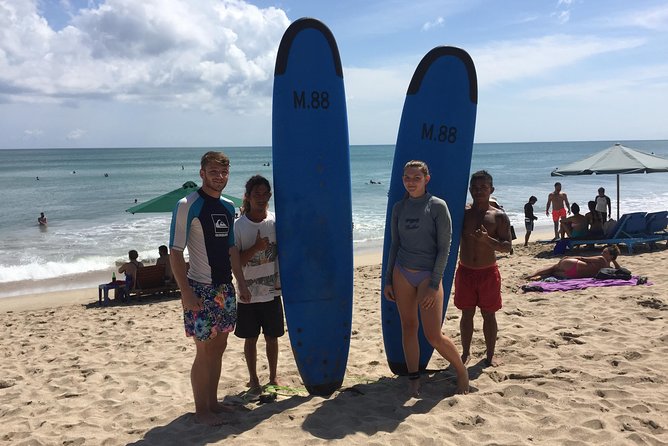
Turning is the part that makes surfing feel like surfing instead of just sliding. This lesson specifically targets turning your board on the wave, and it’s tied to the kind of improvements you’re likely hoping for as you progress.
Here’s what you can learn from a well-run private session:
- How to angle the board so the wave carries you into the turn
- How to shift your body so you can stand up through the maneuver
- How to finish a turn so you’re positioned for your next wave action
The mention of bottom turns and faster cutbacks matters because those skills are repeatable. Once you understand the setup, you can practice them on the next wave rather than starting from scratch every time.
And since you’re solo with the instructor, you can ask for corrections while the lesson is still fresh. That’s a big advantage over group settings where feedback comes in bursts between other people’s attempts.
Beach breaks, reef options, and safety you can actually use
The lesson focus is surfing beach-break waves, getting you comfortable in the ocean, and understanding safety and etiquette. That’s the clearest path for most learners, and it’s what you should expect as the core goal.
At the same time, the included gear and schedule hints at reef break options in some situations. The included equipment notes reef booties during reef trips, and it lists reef boat usage in Sanur. One past private session described an intermediate surfer heading to reef breaks with strong instructor guidance. That suggests reef options can exist, depending on your level and the day’s conditions.
So what should you do with that information? Keep expectations flexible. If your goal is simply getting confident quickly on beach breaks, you’re in the right lane. If you’re chasing reef-break surfing, ask your instructor (once you’re there) whether conditions and your ability line up for that plan.
Safety and ocean knowledge are part of the curriculum. You’ll get coaching on how to stay safer around surf conditions, plus basic ocean awareness. Surfing is fun, but it’s also a real ocean environment, and the lesson aims to make you more competent, not just more daring.
What’s included (and why it matters more than you think)
The included items aren’t just freebies. They solve real problems that can ruin a surf day.
Full equipment, not just a board
You get surfboard, leg rope, and a helmet. That reduces hassle and helps you focus on technique instead of trying to rent the right setup.
Rash guard, leggings, and zinc
You’ll get a Rip Curl rash guard and leggings, plus imported zinc. That’s useful in Bali sun, and it helps you avoid that first-day burn that turns tomorrow into recovery.
Showers and towels
The shower facilities include fresh water, soap, shampoo, and a towel, plus lockers and private changing rooms. That means you can go straight to lunch, shopping, or a beach walk without needing to rinse your gear and fight the smell for hours.
Liability insurance
The lesson includes one million USD liability insurance. It’s not something you think about until you need it, but it does add peace of mind for an activity with real physical risk.
Price and value: is $84.28 worth it?
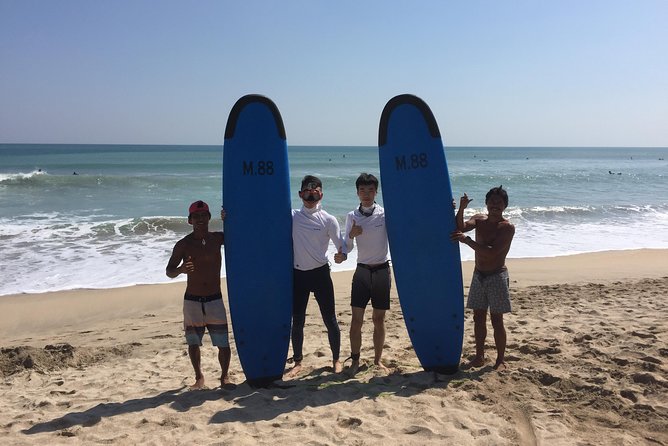
At $84.28 per person, this private lesson can be good value because you’re not just paying for an instructor’s time. You’re also getting:
- pickup and drop within the coverage area
- surf gear and protective items
- rash guard and leggings
- shower and changing facilities
- bottled water
If you had to rent boards, buy or borrow a rash guard, and find a reliable instructor for one-on-one coaching, the cost usually climbs fast. Here, you’re bundling the day’s essentials into one price.
The better way to think about it: the cost is higher than group classes, but the lesson time is focused. When you go from stalled attempts to working technique in one session, that’s hard to put a price on.
That said, treat it like a timed appointment. If pickup gets late or the schedule doesn’t feel smooth, it shrinks the value quickly. One past private lesson experience described a late pickup and delayed drop-off, so it’s worth being proactive with confirmation and pickup point details.
Who should book this lesson, and who should reconsider
This is a great fit if:
- you want one-on-one feedback fast
- you’re a beginner who wants the basics taught clearly and safely
- you’re intermediate and want technique tweaks like bottom turns and cutbacks
- you want a structured plan that ends with you surfing beach-break waves
It’s also a good choice for families in general. Past sessions described families with young surfers and an amateur parent, and the team handled the needs of different comfort levels with supportive coaching.
You might think twice if:
- you need a super flexible schedule later in the day (the 8:00 am start is real)
- your hotel is outside the pickup coverage area
- you’re expecting a full day of surfing (this is about 1 hour 30 minutes, and it’s designed to be intense, not all-day)
The bottom line: should you book Rip Curl School of Surf in Kuta?
I’d book it if your main goal is to get your technique corrected quickly and enjoy a safer, more confident surf session. The combination of private coaching, included gear, and solid on-site facilities makes it an easy value play for Bali.
I’d also plan smart: confirm your pickup location, show up ready for an 8:00 am start, and bring the one thing you’re told to bring yourself: your swimsuit. If you want beach-break learning first, this lesson is built for that. If you’re chasing reef-break surfing, ask on the day whether conditions and your level make it possible.
If you’re ready for your first waves (or your next technique jump), this is the kind of lesson that makes surfing click faster.
FAQ
Where is the surf lesson meeting point?
The lesson meets at Legian Beach, Bali, Indonesia. The activity ends back at the meeting point.
What time does the private surf lesson start?
The start time is 8:00 am.
How long is the lesson?
The duration is about 1 hour 30 minutes.
Is pickup included?
Pickup and transfer back to your hotel are included within the coverage area. You’ll need to share your pickup location when the class is confirmed.
What surf equipment is included?
You’ll get a surfboard, leg rope, and a surf helmet. Reef booties are provided during reef trips.
Do I need to bring anything?
Yes. You’ll need to bring your swimsuit. The rest of the surf gear and rash guard/leggings are provided.
More Bali Workshops and Classes
- HOT PROMO. Beginner Surf Lessons in Bali
★ 5.0 · 193 reviews - Surf Lesson with a Personal Instructor at Kuta Beach
★ 4.5 · 192 reviews - The best surf lessons in Kuta
★ 5.0 · 144 reviews - Bali: Seminyak Silver Jewelry-Making Class
★ 4.9 · 129 reviews - Kuta-Bali : Private Surf Lesson With Surf photos & Videos
★ 4.9 · 112 reviews
Plan One More Day with a Driver
- Bali Nusa Penida West Private All-Inclusive Tour
★ 5.0 · 1,277 reviews - Mount Batur Sunrise Trekking Private Tour with Breakfast and Hotel Transfer
★ 5.0 · 885 reviews - Individual Bali Day Trip with Private Driver and Free WiFi
★ 5.0 · 755 reviews - Private Tour Mount Batur Sunrise Trekking and Natural Hot Spring
★ 5.0 · 431 reviews - Best bali transport service – custom your own itinerary
★ 5.0 · 363 reviews
Paddle Out Again at Kuta
- HOT PROMO. Beginner Surf Lessons in Bali
★ 5.0 · 193 reviews - Surf Lesson with a Personal Instructor at Kuta Beach
★ 4.5 · 192 reviews - The best surf lessons in Kuta
★ 5.0 · 144 reviews - Kuta-Bali : Private Surf Lesson With Surf photos & Videos
★ 4.9 · 112 reviews - Seminyak: 2-Hour Surf Lesson in Seminyak for All Levels
★ 4.9 · 83 reviews
Fresh on the Kuta Travel pages






Kuta Surf Lessons, compared.
 ★ 4.9Uluwatu: Beginner & Intermediate Surf Lesson with EquipmentFrom $36832 reviews
 ★ 5.0HOT PROMO. Beginner Surf Lessons in BaliFrom $13193 reviews
 ★ 4.5Surf Lesson with a Personal Instructor at Kuta BeachFrom $50192 reviews
 ★ 5.0The best surf lessons in KutaFrom $25144 reviews
 ★ 4.9Kuta-Bali : Private Surf Lesson With Surf photos & VideosFrom $15112 reviews
 ★ 4.9Seminyak: 2-Hour Surf Lesson in Seminyak for All LevelsFrom $1983 reviews
 ★ 4.8Uluwatu: Private Surf Lesson with Surf Photos & VideosFrom $4675 reviews
 ★ 5.0Surfnesia Surf Lesson and GuidingFrom $3346 reviews
Browse the lists this tour appears in