
Reviewed · BALI COOKING CLASSES
Authentic Balinese Cooking Classes
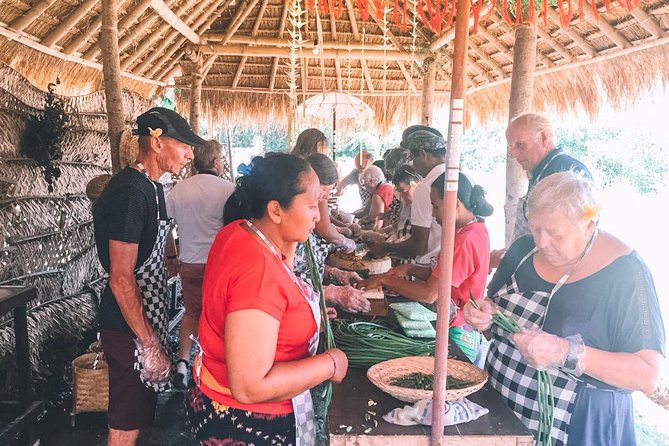
Morning markets and spicy memories in Bali. A small-group Balinese cooking class in the Bakas area of Klungkung gives you two big wins right away: a market tour where you bargain and pick ingredients, and hands-on cooking at your own station where you learn by doing, not watching.
I also like the simple structure: you choose a start time (morning through afternoon), you cook Balinese favorites like satay, nasi goreng, and black rice pudding, then you eat what you make. One thing to factor in is timing and logistics; there are hints that pickup can run late and the market stop may not always match what you’re expecting, so I’d confirm your exact pickup plan the day before.
In This Review
- Key highlights to know before you go
- From Jimbaran to Bakas: why the day starts with a real Balinese setting
- Pickup and transfers: the included ride is the real value add
- Morning market bargaining: learning how to choose ingredients (the smart way)
- The kitchen setup: your hands-on station beats watching
- What you’ll cook: satay, nasi goreng, and black rice pudding
- The pacing and attention: small group size helps you actually learn
- The views and the mood: the part you’ll remember after the recipe notes fade
- English instruction and what to ask so you get the best result
- Price and value: is $65 a good deal in Bali?
- Who should book this Balinese cooking class (and who should think twice)
- Should you book Bakas Cooking Class in Jimbaran?
- FAQ
- Where does this cooking class take place?
- How long is the class?
- Can I choose my start time?
- Is there a market tour included?
- What dishes will I cook?
- Is the class taught in English?
- Does the price include transportation?
- Can I cancel for a full refund?
Key highlights to know before you go
- Pick your start time within the operating window so it fits your Bali rhythm
- Market bargaining and produce choice (especially on morning bookings)
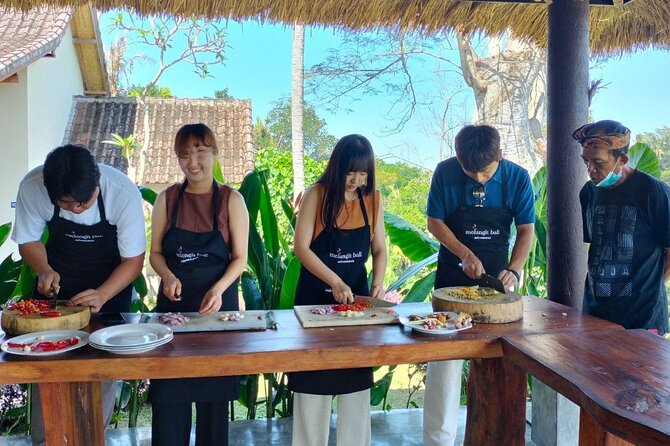
- Hands-on station time with utensils provided, and instruction in English
- Small group size (max 10) so you get real attention while cooking
- Round-trip transfers included from many south Bali and Ubud-area pick-up points
- You leave with recipes so the flavors don’t vanish the next day
From Jimbaran to Bakas: why the day starts with a real Balinese setting
Even if your base is in Jimbaran, Kuta, Sanur, or Ubud, this class isn’t staged in a hotel kitchen. It’s run from the Bakas (Klungkung) area, which matters because cooking on Bali is about context: the ingredients, the pace, and the way people think about flavor.
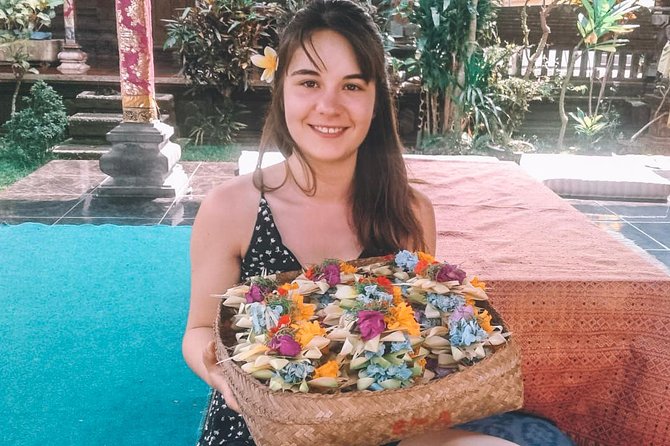
On the day, you’re transferred to the class location, and the vibe tends to be peaceful rather than rushed. One of the best parts is the sense that you’re in the countryside while you’re working. In at least some schedules, people have described rainforest views while cooking and a storybook feel around the property. If you’ve come to Bali to see something beyond resort life, this helps.
The other good news: this is built for normal travelers. You’re not driving yourself, and you’re not trying to translate cooking terms on your own. That support is what turns a fun activity into a smooth half-day.
Still narrowing the shortlist? These are the Jimbaran tours travellers book most.


Pickup and transfers: the included ride is the real value add
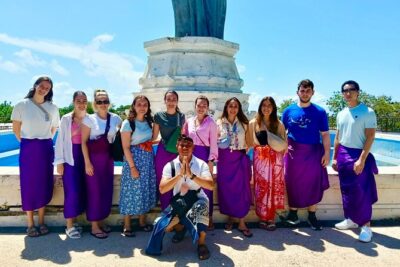
The price here isn’t just for chopping and tasting. Round-trip transfers are included from a long list of areas, including Jimbaran and much of south Bali, plus Ubud, Denpasar, and even Benoa Harbor. That means you don’t have to solve transport at the last minute (or pay extra and guess how long the drive will take).
In practice, this changes who the class suits. It’s a good fit if you:
- want to travel with less stress
- don’t want to organize a taxi for the whole day
- prefer a guided schedule without the hassle
Now, the consideration. One experience described a pickup delay, with the driver arriving much later than expected, then reaching a market that was partly closed. That’s not something you should ignore. My advice: when you get your confirmation, double-check the pickup time window and your driver instructions. If you’re the type who hates waiting, it’s worth building in a little buffer for Bali timing.
Morning market bargaining: learning how to choose ingredients (the smart way)
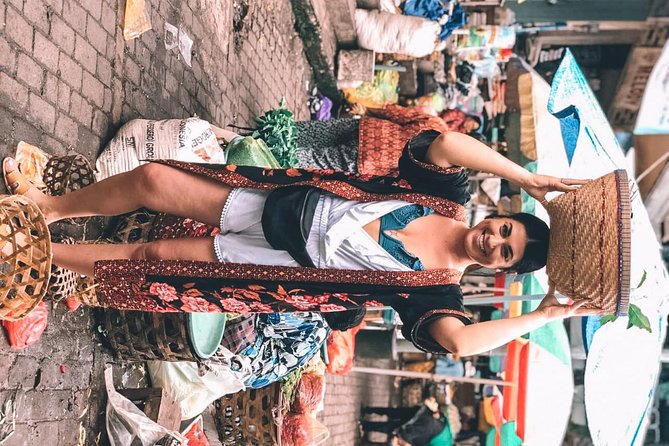
If you book the morning class, the day typically begins with a trip to a local market. This is where you learn the practical side of Balinese cooking: how people shop, what they look for, and how they decide what’s worth buying.
The class leader explains Balinese tastes and customs, and you also get guidance on local meats, fish, and produce. The point isn’t just to buy items. It’s to understand how ingredient selection affects flavor and texture later in the kitchen.
The most useful skill in a market context is bargaining. You don’t just “try to negotiate.” You learn what questions to ask, and how to spot quality. You also learn what to select and what to reject. That kind of lesson sticks because you can use it the next time you shop—whether it’s in Bali or back home.
One more important note: the market stop is part of the promise for morning bookings. If you’re going for this explicitly, I’d ask what market you’ll visit and confirm it’s active at the time of your pickup. The goal is to prevent a scenario where you arrive late and the stalls are already winding down.
More hands-on Balinese workshops and classes
- Surfnesia Surf Lesson and Guiding★ 5.0 · 46 reviews
- Private Surf Lessons in Padang Padang – Uluwatu – Bali★ 4.0 · 30 reviews
- Bali Jewelry Silver Class in Uluwatu with Gold Plating Option★ 5.0 · 27 reviews
- Uluwatu: Surf Lessons Beginner★ 5.0 · 3 reviews
The kitchen setup: your hands-on station beats watching
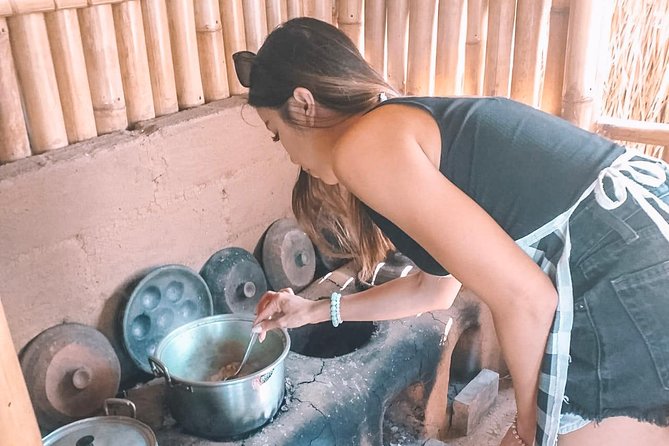
Here’s the style of class I actually recommend: hands-on. You’re not standing behind someone else’s shoulder. You get your own cooking station and utensils, and the class is conducted in English.
That detail matters. Cooking classes often fall apart when the teaching language is unclear or when everyone shares one counter. Here, the structure is meant to keep you involved from the start—shopping to chopping to cooking—so you can taste what you’re doing and adjust as you go.
Expect a real production day. You’ll prep ingredients, chop, grind (depending on the dish), cook, and then eat what you made. It’s active work, not a slow demo with a polite bite at the end. If you like cooking, you’ll feel the payoff quickly.
What you’ll cook: satay, nasi goreng, and black rice pudding
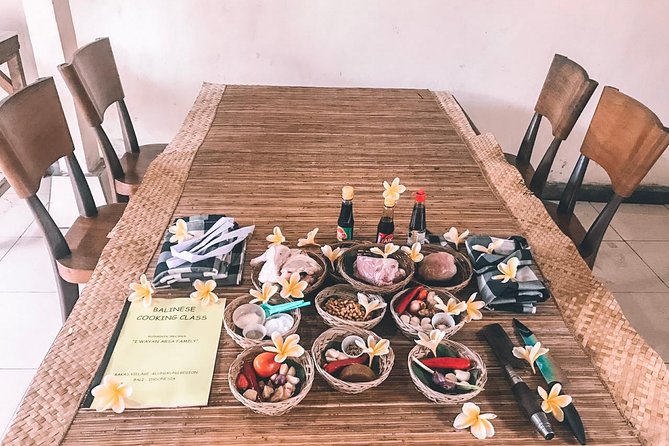
The class centers on Balinese favorites, including satay, nasi goreng, and black rice pudding. These three dishes are a smart mix because they teach different building blocks:
- Satay helps you understand how spices, seasonings, and grilling or cooking method work together. You get the satisfaction of making something that looks simple but depends on careful seasoning.
- Nasi goreng teaches the “flavor logic” of fried rice style dishes—balance, heat, and how sauces and aromatics tie together. This is the kind of recipe that can translate well to home cooking.
- Black rice pudding is your sweet finish and a reminder that Balinese food isn’t just savory. You learn how a different texture and ingredient set changes the whole experience.
I like that the dishes are recognizable enough to cook again later, but still clearly Balinese in style. You’re not learning an identity-free “international cooking class.” You’re learning food with a local signature.
The pacing and attention: small group size helps you actually learn
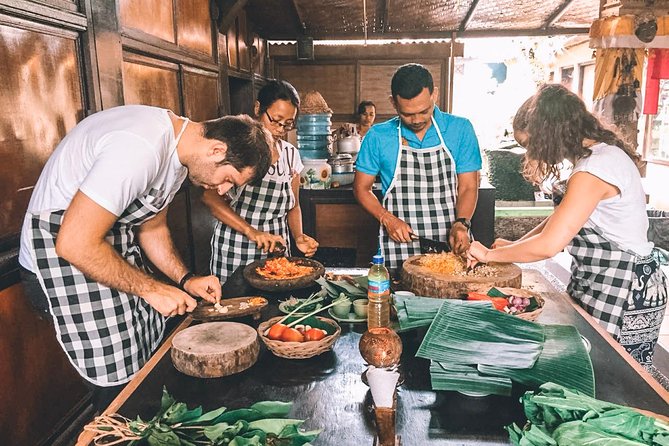
The class is limited to a maximum of 10 participants. That’s a big deal for learning. Smaller groups mean the chef and staff can correct technique, answer questions, and help you troubleshoot in real time—like when a sauce needs more time or when an ingredient choice isn’t delivering the flavor you expected.
In a larger class, you end up waiting for your turn and hoping you remember the steps. In a small group, you get closer to a true coaching session.
One chef name that comes up in post-class responses is Gede. The messages attached to at least one positive experience read like someone who cares about the day, not just the transaction. That kind of attitude usually matches what you feel during the class: friendly guidance, patience, and a focus on getting you cooking confidently.
The views and the mood: the part you’ll remember after the recipe notes fade
Food tastes best when the day feels good. In this case, some descriptions highlight a scenic setting with rainforest views and an overall atmosphere that feels relaxed rather than rushed. Another account mentions nearby rice fields during the ride or around the location area, which fits the broader feel of Bali beyond the coast.
This isn’t just aesthetic. When you’re cooking, you want the day to feel calm enough to pay attention. If you’re stuck in traffic fumes in a car-lined parking lot the whole time, it’s harder to focus on flavors. The calmer setting helps you absorb what you’re learning.
Also, the class is described as fun, with local ingredient focus and skilled instructors who can explain Balinese cooking in a way that stays practical. If you’ve been burned by “culture shows” that forget the actual food part, this tends to be the opposite.
English instruction and what to ask so you get the best result
The class is taught in English, and that’s a confidence boost. But don’t assume it’s enough to coast through.
If you want to get your money’s worth, ask questions that connect to home cooking. For example:
- What’s the key flavor balance you want for nasi goreng?
- How do you know your satay seasoning is right before cooking?
- For black rice pudding, what texture should you aim for?
The class also includes recipes you can bring home. That means you can recreate the dishes later, but you’ll do it better if you understand the “why” behind what you tasted.
Price and value: is $65 a good deal in Bali?
At $65 for about 6 hours, the value is strongest when you consider what’s included: a hands-on class, utensils and cooking station support, instruction in English, and round-trip transfers from a wide set of locations in south Bali and Ubud-area. For many people, the transport alone would cost extra if you booked it separately.
So the question becomes: are you paying for cooking plus logistics, or just a meal?
From what the experience promises and how it’s described, you’re paying for a full, guided, do-your-own-cooking day. You start with market learning (on morning bookings), then you cook multiple dishes, and you eat what you make. That’s a real use of time, not a short tasting detour.
Just keep one practical caution in mind: if you’re highly sensitive to pickup timing, you may feel the frustration if the driver is late. That doesn’t automatically make the class bad, but it can change your day. If your schedule is strict, communicate your pickup expectations early.
Who should book this Balinese cooking class (and who should think twice)
This experience is best for you if you:
- want a hands-on cooking class with a real market stop (morning bookings)
- enjoy eating what you cook
- prefer small groups where you can ask questions
- want transfers included so you don’t juggle transport plans
Think twice if:
- you have very tight timing for later in the day and hate schedule surprises
- your main goal is shopping at the market for specific items and you expect a full, uninterrupted market experience every time
- you dislike being asked to bargain or negotiate at all (the market part is part of the learning)
If you’re in the middle—open to local rhythm, excited to learn cooking methods, and willing to confirm pickup details—this is a great match.
Should you book Bakas Cooking Class in Jimbaran?
I’d book it if you want Balinese food made practical. The combination of market bargaining + hands-on cooking + English instruction is exactly what turns a travel activity into a skill you can repeat at home. With transfers included from lots of areas, it also feels like a fair deal for a half-day worth of work and a proper meal.
Just do one thing before you go: confirm your pickup time window and market expectations, especially if you’re booking a morning slot. If you handle that, you’ll spend the day learning how to cook Balinese dishes in a way that actually makes sense.
FAQ
Where does this cooking class take place?
The class is run in the Bakas area of Klungkung, Bali, with pickup and round-trip transfers offered from many locations in south Bali and Ubud.
How long is the class?
It’s about 6 hours, approximately.
Can I choose my start time?
Yes. You can pick the start time that works for you, with classes operating between 7:00 AM and 3:00 PM.
Is there a market tour included?
For morning bookings, the day starts with a trip to a local market where you learn about Balinese tastes, customs, and how to choose ingredients.
What dishes will I cook?
You’ll cook Balinese treats including satay, nasi goreng, and black rice pudding.
Is the class taught in English?
Yes, the cooking class is conducted in English.
Does the price include transportation?
Yes. The package includes round-trip transfers from addresses in areas listed in south Bali and Ubud, including Seminyak, Legian, Kuta, Nusa Dua, Jimbaran, Sanur, Ubud, Denpasar, and Benoa Harbor.
Can I cancel for a full refund?
You can cancel for a full refund if you cancel at least 24 hours before the experience’s start time. If you cancel less than 24 hours before, the amount paid is not refunded.
More Bali Workshops and Classes
- Surfnesia Surf Lesson and Guiding
★ 5.0 · 46 reviews - Private Surf Lessons in Padang Padang – Uluwatu – Bali
★ 4.0 · 30 reviews - Bali Jewelry Silver Class in Uluwatu with Gold Plating Option
★ 5.0 · 27 reviews - Uluwatu: Surf Lessons Beginner
★ 5.0 · 3 reviews
Fresh on the Kuta Travel pages






Bali Cooking Classes, compared.
 ★ 5.0Chef Bagus Balinese Indonesian Food Cooking ClassFrom $5189 reviews
 ★ 5.0Kekeb Cooking Class at Nusa DuaFrom $5533 reviews
 ★ 5.05 Star Private Cooking Class Experience in Bali, Lunch IncludedFrom $1528 reviews
 ★ 5.0Mufu Rendang Cooking Class KutaFrom $396 reviews
 ★ 5.0Traditional Balinese Cooking Class with Ubud TourFrom $656 reviews
 ★ 5.0Cycling and Cooking Class in UbudFrom $915 reviews
 ★ 5.0Balinase Cooking Class and Private Ubud Day TourFrom $293 reviews
Browse the lists this tour appears in