
Reviewed · WORKSHOPS
Bali: Canang Sari Offering Making Workshop
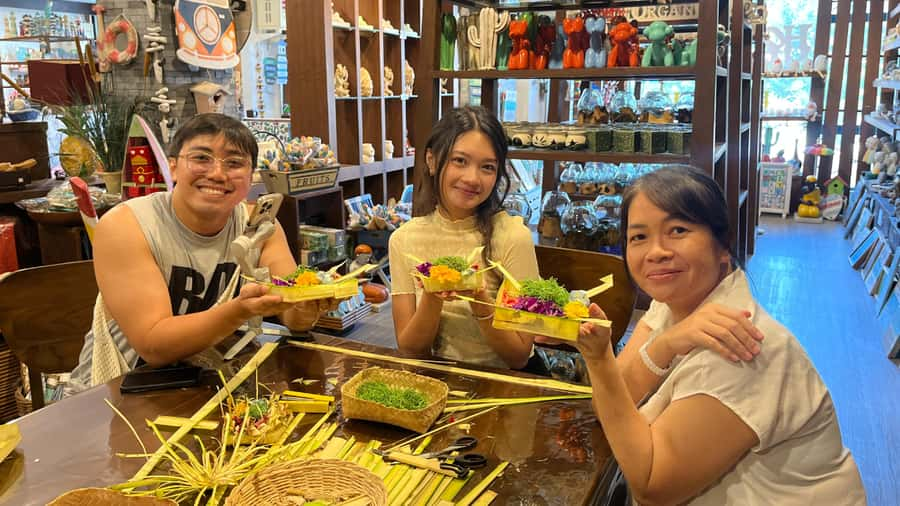
Bali feels spiritual even when you’re just walking down the street. This workshop teaches you how to craft a Canang Sari offering step by step, and I especially like that you learn the ceper base weaving and the flower symbolism (direction and color). One thing to consider: this isn’t only a craft class, so come ready to follow a few cultural moments with respect.
You’ll be guided by a local expert in English as you assemble a real offering that’s meant to be placed as part of everyday Hindu practice. I also like that the session is designed to work for both adults and kids, so the pace doesn’t feel intimidating. In the middle, you’ll connect the hands-on work to the Balinese principle of harmony called Tri Hita Karana, which helps the whole experience make sense, not just look pretty.
At the end, you’ll participate in a traditional offering ceremony and head home with a souvenir. The overall setup runs about 2 hours, costs $38, and includes all materials, refreshments, and guidance. If you’re expecting a silent, museum-style activity, switch gears now. This is participatory, and you’ll be doing the making.
In This Review
- Key Things You’ll Appreciate Right Away
- Why Canang Sari Is More Than Street Decor
- What You’ll Make: Ceper Base, Flowers, and Offering Components
- Tri Hita Karana in Plain Language While Your Hands Are Busy
- The 2-Hour Workshop Flow: From Welcome to a Ceremony Moment
- Price and Value: Is $38 Worth It?
- Practical Tips So You Get the Most Out of It
- Who Should Book This Workshop (And Who Might Not Love It)
- Should You Book a Canang Sari Offering Making Workshop?
- FAQ
- How long is the Bali Canang Sari offering making workshop?
- How much does it cost?
- What language is the instruction provided in?
- What’s included in the price?
- Is alcohol allowed during the activity?
- Is the activity suitable for wheelchair users?
Key Things You’ll Appreciate Right Away
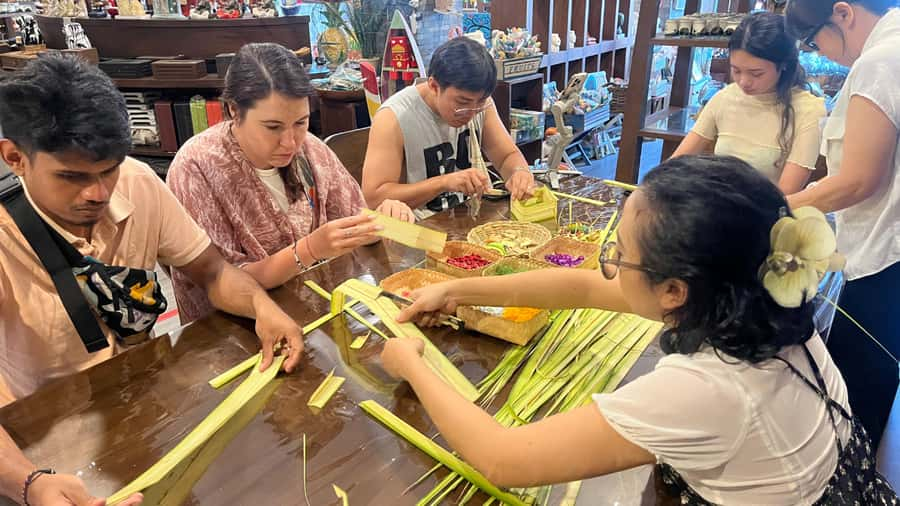
- You weave the ceper base from young coconut or banana leaves, not just assemble toppings
- You arrange flowers by meaning, with color and direction tied to deities
- Tri Hita Karana becomes practical as you build the offering for harmony
- You join a traditional ceremony, so your craft stays connected to its purpose
- Materials, refreshments, and a souvenir are included, making it good value for the time
- English instruction and small or private groups help you ask questions and keep the pace comfortable
Why Canang Sari Is More Than Street Decor
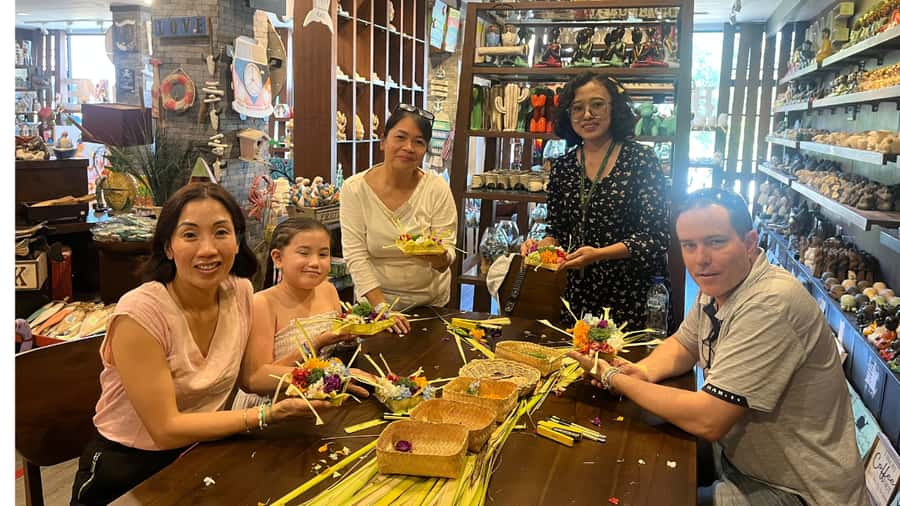
If you’ve spent any time in Bali, you’ve probably noticed Canang Sari offerings everywhere: outside homes, near temples, and along everyday routes. The key thing is that these small pieces of devotion are not random decoration. They’re a daily expression of gratitude and balance, tied to the idea that people should live in harmony with the divine, other humans, and the natural world.
What makes this workshop worth your time is that it treats the offering as something you understand, not just something you copy. You’ll learn what the components represent and why they go together in the first place. That helps you see the streets differently afterward. Instead of thinking, Oh, there’s another offering, you start noticing the intention behind where they appear.
This is also a good activity if you want culture that isn’t stuck behind glass. Canang Sari are meant to be handled, made, and offered regularly. The workshop gives you the closest “get your hands on it” experience that still stays respectful to the tradition.
More hands-on Balinese workshops and classes
What You’ll Make: Ceper Base, Flowers, and Offering Components
Your Canang Sari starts with a woven leaf base, often called the ceper. You’ll learn to weave this base using young coconut or banana leaves. That part matters because it teaches patience and precision. The leaf work is where the offering gets its structure, and you can feel the skill in how the weaving holds together.
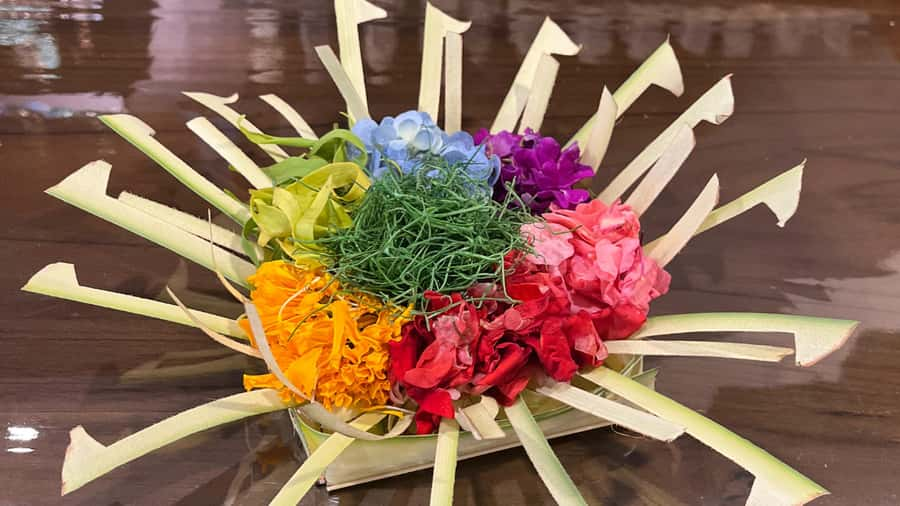
Once the base is ready, you move into the part that looks like classic Bali offering-making: arranging items on top. You’ll place vibrant flowers and other offering materials in a specific way. The workshop explains that each color and direction is symbolic, connected to Hindu deities. In other words, you aren’t just building a pretty arrangement. You’re building a symbolic layout.
The offering usually includes more than flowers. You’ll work with elements such as betel leaves, lime, areca nuts, and incense, based on the offering composition described for the experience. Those choices add meaning and scent, and they reflect what the offering is meant to communicate: gratitude, devotion, and connection.
If you’re thinking, Will I mess it up, and will it be a waste of money? Try to relax. The workshop is structured as a guided activity with all materials provided. You’re not being evaluated like it’s a craft contest. The goal is to learn the process and participate meaningfully.
Tri Hita Karana in Plain Language While Your Hands Are Busy
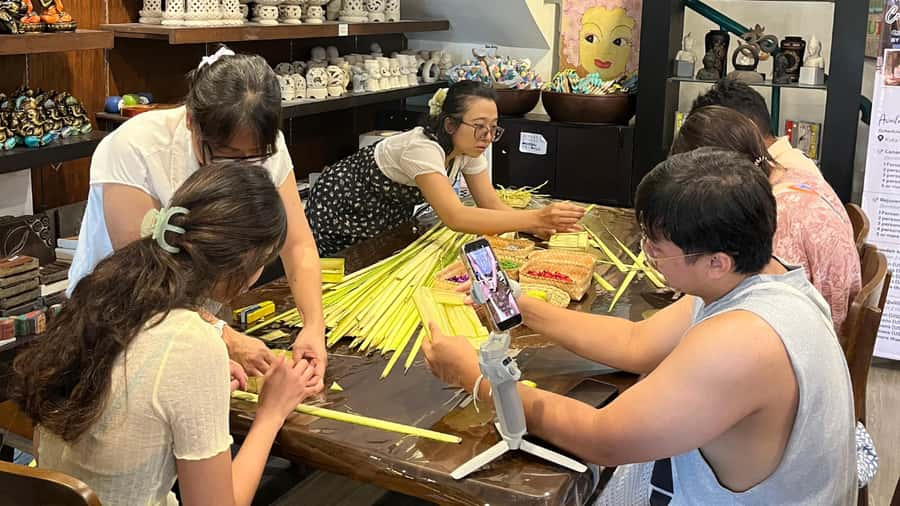
A lot of Bali activities say the word harmony. This one ties it to Tri Hita Karana, the Balinese principle of three-part harmony: humans, nature, and the divine. The workshop framing helps you see why Canang Sari show up where they do. They’re not only for temples; they’re placed in everyday locations to support spiritual balance in daily life.
Here’s the practical value of learning this during the workshop: once you understand the philosophy, the offering stops being a “thing you make” and becomes a “practice you understand.” You’ll likely discuss how Canang Sari relate to honoring both higher and lower spirits, and why offerings are part of maintaining balance throughout the day.
That philosophical context also changes your mindset. While you weave the base and place the flowers, you’re not just copying a step. You’re making something meant to communicate respect and gratitude. It gives the activity a calm focus, almost like a moving meditation—without needing any spiritual background before you show up.
And yes, the experience stays fun. The hands-on rhythm, the color placement, and the step-by-step guidance make it feel like art and craft time. But the meaning behind it is what lingers after.
- Nusa Penida day trip: boat, 4 snorkeling, Manta rays & Land tour★ 5.0 · 2,033 reviews
- Bali Nusa Penida West Private All-Inclusive Tour★ 5.0 · 1,277 reviews
- Mount Batur Sunrise Trekking Private Tour with Breakfast and Hotel Transfer★ 5.0 · 885 reviews
- Individual Bali Day Trip with Private Driver and Free WiFi★ 5.0 · 755 reviews
- Waterbom Bali Tickets – Single Day Pass★ 4.5 · 620 reviews
The 2-Hour Workshop Flow: From Welcome to a Ceremony Moment
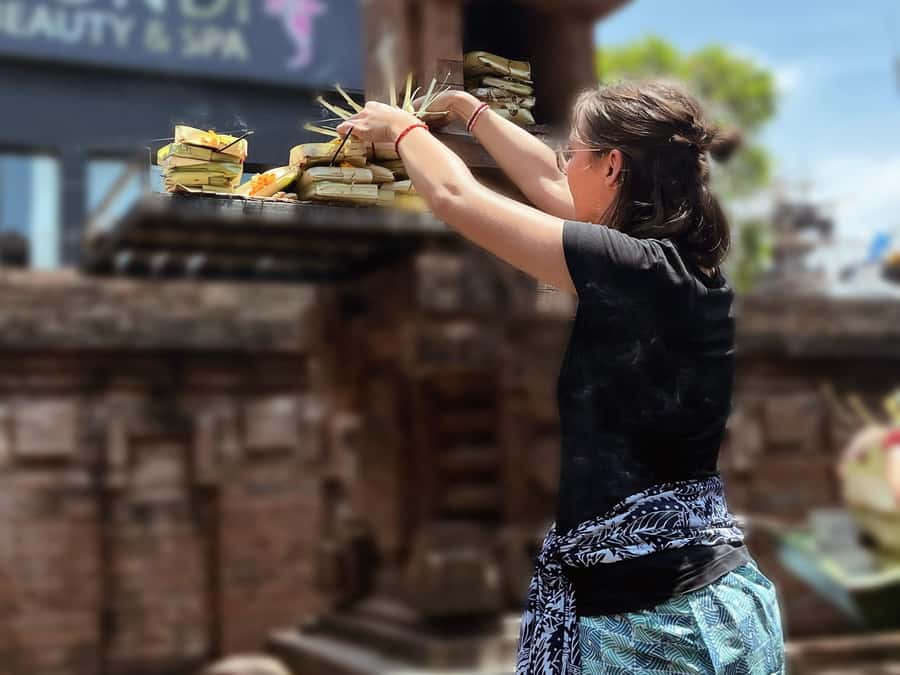
The session runs for 2 hours, and the structure is pretty straightforward, which is great if you don’t want your day turned into a long cultural itinerary. You’ll be guided from start to finish, and your group can be private or small, so you’re not stuck waiting for a huge class to catch up.
A typical flow goes like this:
First, you’re welcomed and given what you need for the activity. Based on prior participant experiences, you may be greeted with traditional attire, which helps shift you into the right mindset. You’ll also get refreshments and local snacks during the experience, which makes the time feel comfortable rather than rushed.
Next comes the main craft work. You start by learning the leaf weaving for the ceper base using young coconut or banana leaves. Then you move on to arranging the flowers. The guidance includes the symbolism that links color and direction to deities, which gives you something clear to follow rather than vague instructions.
After that, you connect your finished offering to the ceremony portion of the experience. The workshop includes participation in a traditional offering ceremony, and in practice that usually means moving from making into a moment where the offering is used with intention. If your session includes taking the offering to a nearby temple area, treat it as part of the cultural practice, not a photo opportunity.
Finally, you take your work and your souvenir home, plus whatever you learned from asking questions to the local expert. That Q&A piece is where the background stories often make the biggest difference, because you’ll get context for why Canang Sari are made daily.
Price and Value: Is $38 Worth It?
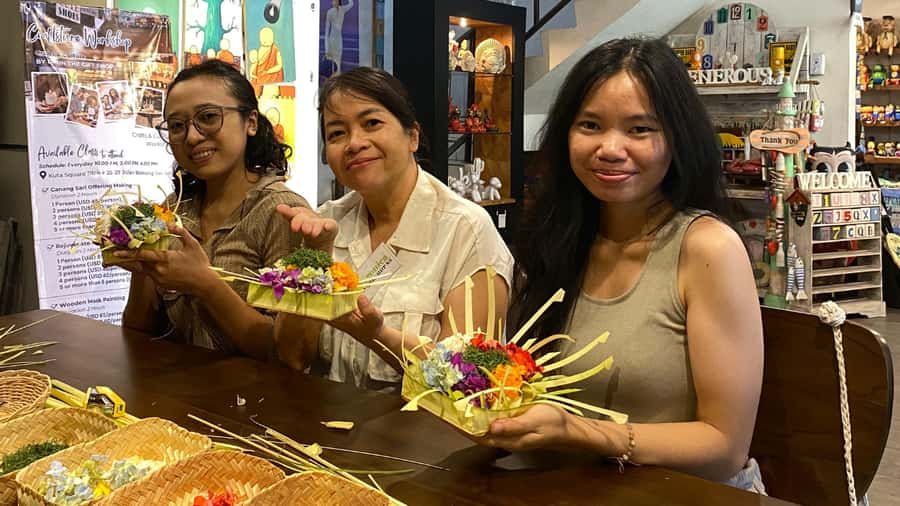
At $38 per person, this workshop is priced like a short, guided cultural experience, not a cheap craft drop-in. The good news is that it includes the parts that normally add hidden costs: materials, guidance, a ceremony component, refreshments, and a souvenir.
So you’re not paying extra for supplies you’ll throw away. You’re also not paying for instruction you have to figure out on your own. The materials are part of the experience, and the guidance is what turns the activity from random leaf weaving into something meaningful and accurate.
The 2-hour duration is also a real value factor. You get enough time to build the offering from the base up, learn the symbolism, and participate in the ceremony moment without sacrificing half your day. If you’re on a tight schedule in Bali, this is one of those activities that can fit without draining your energy.
A final value point: because the workshop is designed to be enjoyable for both adults and kids, you can do it as a family activity without worrying it will be boring for one group. That flexibility is harder to find in more traditional or longer cultural programming.
Practical Tips So You Get the Most Out of It
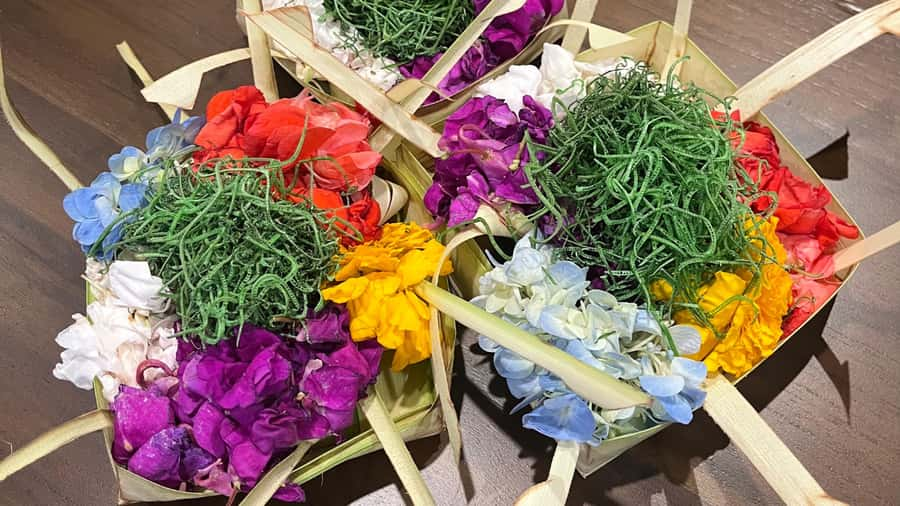
To make your workshop smoother, plan around the practical rules and the setting. Alcohol and drugs aren’t allowed, so keep your day alcohol-free if you’re heading here afterward. Wear something comfortable you can move in, since you’ll be working with leaves and arranging items.
Meeting point details can vary by option booked, so don’t wait until the last minute to confirm where to go. If you’re coordinating with friends, take a quick moment to align on the exact location so you don’t lose time.
Even though the activity is hands-on, it’s still respectful culture. You’ll be working with religious offering materials and a Hindu practice context. Treat the process calmly. Ask questions if something is unclear, but don’t treat the ceremony as something you can rush or ignore.
Also, if you’re sensitive about mess, remember you’re handling plant materials and arranging small components. That’s part of the charm. A short workshop like this is best approached with a light attitude: expect a little tang, a little scent from incense, and a small amount of leaf texture on your hands.
Finally, if you’re hoping for a perfect souvenir photo, keep in mind that the point is the making and the meaning. Your offering will be yours, but it’s not about looking identical to anyone else’s.
Who Should Book This Workshop (And Who Might Not Love It)
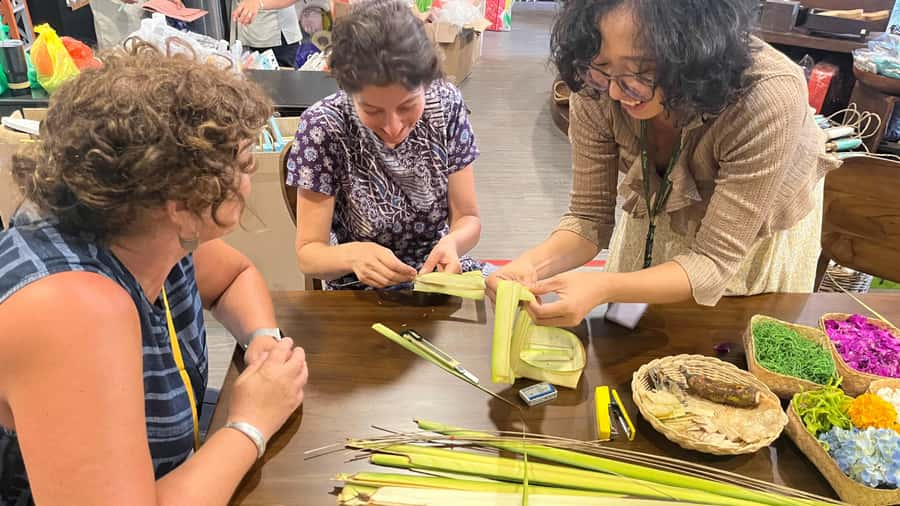
This is a great pick if you want:
- A hands-on Bali experience tied to Hindu daily practice
- A cultural lesson that’s explained in English
- An activity you can do with kids without it turning into adult-only sightseeing
- A short, focused session that doesn’t steal your whole day
It also works well if you’ve been curious about why offerings appear everywhere and want a real, practical explanation. You’ll leave knowing what goes into a Canang Sari and why the placement and arrangement matter.
It may not be ideal if you strongly prefer secular activities with no ceremony element. This experience includes a traditional offering ceremony, so you’ll want to be comfortable participating respectfully.
One note: the activity is not suitable for wheelchair users. If accessibility is a concern for your group, confirm details before you book.
Should You Book a Canang Sari Offering Making Workshop?
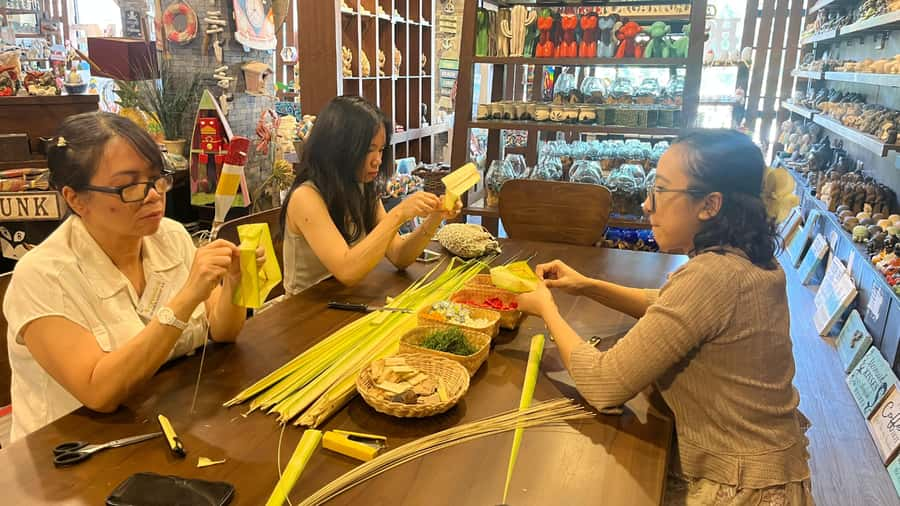
If you like learning by doing, I’d book it. This is the rare short activity where your hands stay busy and your mind gets the cultural context that makes everything click. The weave of the ceper, the symbolism behind flower colors and directions, and the Tri Hita Karana philosophy turn it into more than an arts-and-crafts souvenir hunt.
Go for it if you want a meaningful Bali experience that fits into a normal day and doesn’t require special prior knowledge. At $38 with materials, guidance, refreshments, a souvenir, and a ceremony moment included, it’s good value for the amount of instruction and purpose you get.
Skip it only if you’re looking for a purely casual, secular activity where there’s no spiritual practice component. Otherwise, this workshop is one of the most practical ways to understand something you’ll keep seeing around you long after you leave.
FAQ
How long is the Bali Canang Sari offering making workshop?
The workshop lasts about 2 hours.
How much does it cost?
It costs $38 per person.
What language is the instruction provided in?
The instructor provides guidance in English.
What’s included in the price?
All materials are included, along with guidance from a local expert, participation in a traditional offering ceremony, refreshments, and a souvenir.
Is alcohol allowed during the activity?
No. Alcohol and drugs are not allowed.
Is the activity suitable for wheelchair users?
No, it isn’t suitable for wheelchair users.
More Bali Workshops and Classes
- HOT PROMO. Beginner Surf Lessons in Bali
★ 5.0 · 193 reviews - Surf Lesson with a Personal Instructor at Kuta Beach
★ 4.5 · 192 reviews - The best surf lessons in Kuta
★ 5.0 · 144 reviews - Bali: Seminyak Silver Jewelry-Making Class
★ 4.9 · 129 reviews - Kuta-Bali : Private Surf Lesson With Surf photos & Videos
★ 4.9 · 112 reviews
Fresh on the Kuta Travel pages






Workshops, compared.
 ★ 4.9Uluwatu: Beginner & Intermediate Surf Lesson with EquipmentFrom $36832 reviews
 ★ 4.9Silver Jewelry Making Class in Kuta or UluwatuFrom $41380 reviews
 ★ 4.9Uluwatu Silver Jewelry Making Workshop with CreationFrom $46260 reviews
 ★ 5.0HOT PROMO. Beginner Surf Lessons in BaliFrom $13193 reviews
 ★ 4.5Surf Lesson with a Personal Instructor at Kuta BeachFrom $50192 reviews
 ★ 5.0The best surf lessons in KutaFrom $25144 reviews
 ★ 4.9Seminyak Silver Jewelry-Making ClassFrom $43129 reviews
 ★ 4.9Kuta-Bali : Private Surf Lesson With Surf photos & VideosFrom $15112 reviews
Browse the lists this tour appears in