
Reviewed · UBUD & RICE TERRACE DAY TRIPS
Ubud Pottery Ceramic Class in Bali
A Bali ceramics class can feel like a souvenir trap. This one is different because you actually make the stuff, guided step by step by local artisans. You’ll work with 2kg of clay, usually combining wheel throwing and hand-building, then finish with pieces you can personalize.
I like that it’s small and hands-on: the group caps at 10 travelers, so you’re not just watching someone else work. I also like that the mentors teach from the basics, so first-timers aren’t left guessing.
The main thing to consider is timing and location. The studio starts in Singapadu/Sukawati, about a 30-minute drive from central Ubud (traffic can stretch it), and if you want to take your pottery home you need at least 4 days left.
In This Review
- Key things that make this Ubud pottery class work
- Getting to Tana ampo Pottery Studio (Singapadu/Sukawati) without stress
- The 3-hour flow: what happens once you sit down with 2kg of clay
- You start with clay basics and hand-building
- You also get wheel throwing time
- You add personal touches
- What you actually learn about clay and ceramics in Bali
- The studio setting in the Ubud-area countryside
- Small group mentoring: how to get the most out of your pottery class
- Taking your pottery home: the 4-day rule you should plan for
- Price and value: is $31.31 a good deal for Bali pottery?
- Who this Ubud ceramics class suits best
- Quick practical checklist before you go
- Should you book this Ubud pottery class?
- FAQ
- How long is the Ubud pottery ceramic class?
- Where does the class start and where does it end?
- What’s included in the price?
- Do I need prior pottery experience?
- Can I take my pottery home?
- How big is the group?
- What is the cancellation policy?
Key things that make this Ubud pottery class work
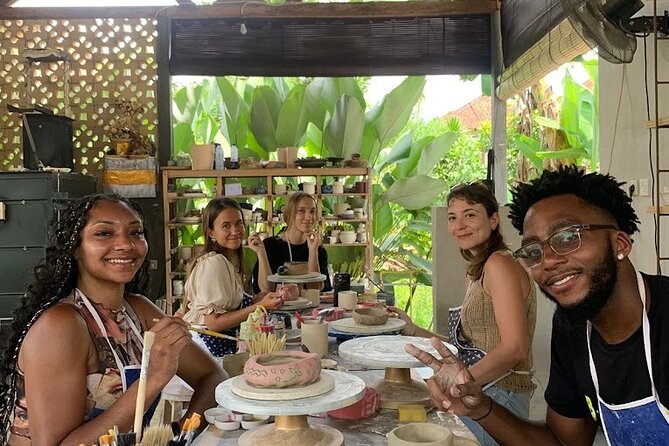
- Wheel time plus hand building so you get a real sense of how clay behaves in different methods
- 2kg of clay at your station, not a token pinch of dough
- Small group size (max 10) for real guidance instead of a crowd shuffle
- A garden-style studio setting that keeps the class calm and focused
- Mentors who start from basics, including how to shape and spin
- A 4-day rule for take-home pieces, so plan your Bali schedule
Getting to Tana ampo Pottery Studio (Singapadu/Sukawati) without stress
This class meets at Tana ampo Pottery Studio, Central Singapadu, Sukawati, in Gianyar Regency, Bali. The activity ends back at the meeting point. That round-trip structure is nice because you’re not scrambling to line up transport after you’re dusty and tired.
Location matters here. Even if your mind labels this as an Ubud activity, the studio is in the Singapadu/Sukawati area. It’s roughly 30 minutes from central Ubud, but expect longer with traffic. I suggest building in a little buffer so you arrive calm, not rushed.
One more practical note: your confirmation comes at booking, and your ticket is mobile. So keep your phone handy on arrival. If you’re traveling with a group, it’s smart to designate one person as the ticket holder so you don’t all circle the parking area at once.
More Ubud and Tegalalang rice-terrace day trips



The 3-hour flow: what happens once you sit down with 2kg of clay
The class runs about 3 hours. That’s a realistic window for learning, making, and finishing enough that your pieces feel like yours.
Here’s the core experience you should expect during those hours:
You start with clay basics and hand-building
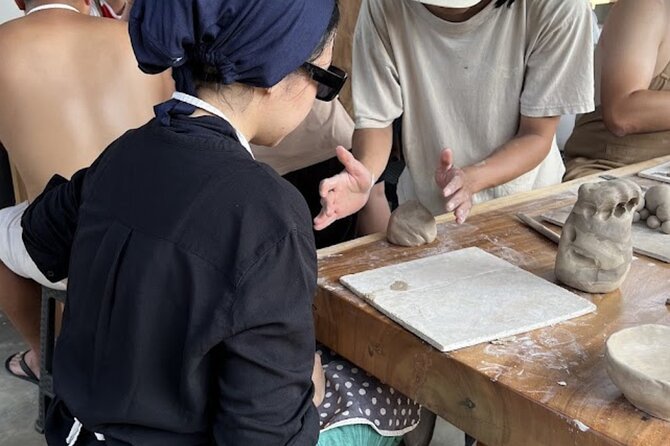
You’ll begin learning foundational techniques. The class covers basic ceramic making methods like hand building and molding, which is great if you’ve never worked with clay before. The mentors teach from the basics, so even if your first attempt looks like an oval pancake, you’re in the right place.
Hand-building is often the fastest way to feel progress. You shape a form, adjust it, and learn how clay responds when you press, smooth, or refine edges. It’s hands-on learning, not just instructions from across the room.
More hands-on Balinese workshops and classes
- Ubud Pottery Ceramic Class in Bali★ 4.5 · 7 reviews
- Beginner Class Becomes Silversmith With Bali Silver Material★ 5.0 · 6 reviews
You also get wheel throwing time
Many pottery workshops in Bali focus on one method. This one includes spinning/wheel throwing. That matters because the wheel teaches you a different kind of control. You learn how to center, manage pressure, and shape while the clay spins.
In practice, you may end up making two pieces, commonly one by hand and one on the wheel. Either way, the goal is the same: you should leave with more than one experience of clay behavior, so you can tell what you liked (and what you want to try again later).
You add personal touches
The class also gives you time to add your own touches. That can be carving details, refining shapes, or making decisions about the look of your piece. This is where the class stops being purely educational and starts feeling creative—because the form reflects what you chose.
What you actually learn about clay and ceramics in Bali
Pottery sounds simple until you realize clay is not one material. The class teaches you that there are different types of clay and that not all soils work for making ceramics. That’s the kind of practical, real-world detail you won’t get from a quick demo.
You also learn the basic technique set that pottery makers use:
- Spinning (wheel throwing)
- Hand building
- Molding
Even if you’re not trying to become a potter, knowing these categories helps you understand why two ceramics pieces look so different. It also helps when you shop later—because you start noticing craftsmanship instead of just buying the pretty thing.
I like this kind of learning because it makes you more confident in the moment. When you know what the mentor is trying to teach—pressure, centering, smoothing—you can correct your own work instead of feeling lost.
The studio setting in the Ubud-area countryside
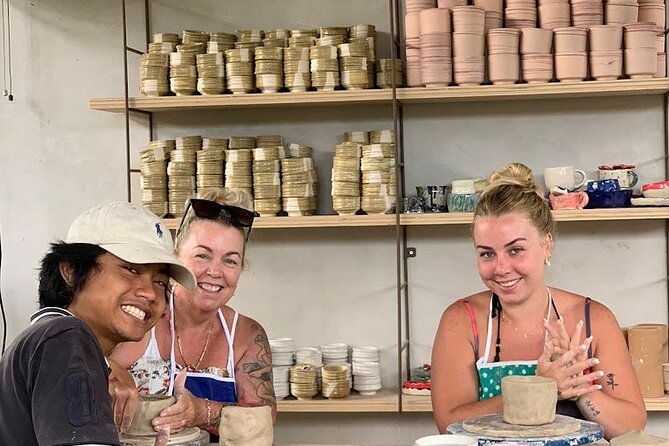
A lot of Bali activities happen under fluorescent lights or in a tight indoor corner. Here, the class is set at Tana ampo Pottery Studio with a beautiful garden feel. That calm environment changes the vibe. It’s easier to focus when you’re not fighting noise, crowds, or constant foot traffic.
It also makes the lesson more enjoyable because you’re not just doing a task. You’re spending time in a working creative space. The garden-style layout encourages a slower pace—hands busy, mind quiet.
If you’re coming from Ubud’s busy center, this is a nice contrast. You get creativity without the chaos.
Small group mentoring: how to get the most out of your pottery class
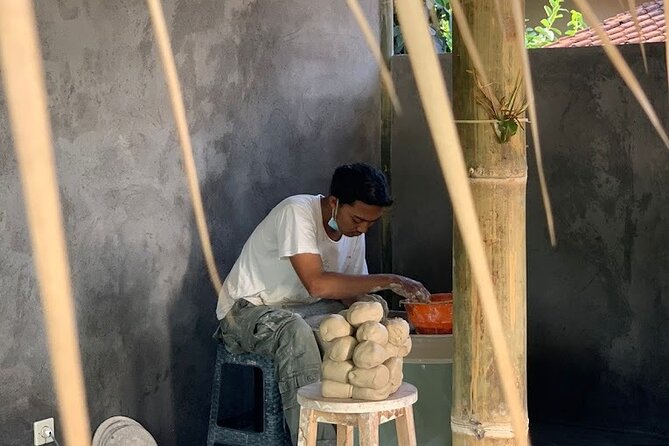
This class caps at 10 travelers, which is a big deal. In a small group, you’re more likely to get hands-on correction when something isn’t working. You can ask questions, show your progress, and get quicker feedback.
The mentors teach in a way that makes beginners comfortable. That shows up in the details: they start with basics so you’re not thrown straight into complicated steps.
To make the most of your time, do this:
- Ask for a quick check early, before you get too committed to a shape.
- Pay attention to how they hold the tool or apply pressure—small grip changes matter a lot on the wheel.
- Don’t fight the clay too much. Clay often rewards patience and small adjustments.
Also, plan to get a little messy. Clay class is tactile by nature, and even with care you’ll likely have some residue on sleeves or hands.
Taking your pottery home: the 4-day rule you should plan for
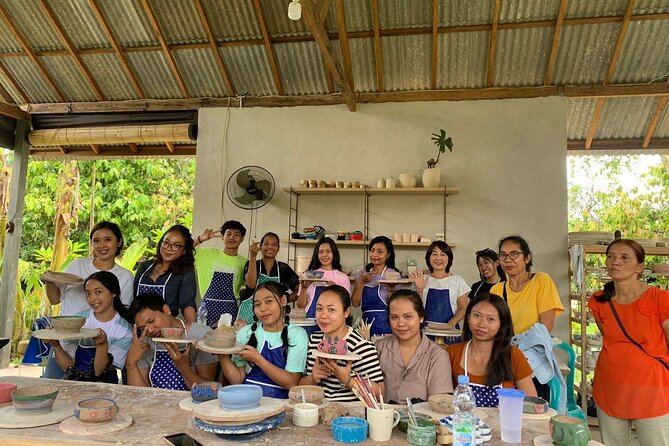
The class includes your materials: 2kg clay. But taking your piece home depends on processing time. The guidance is clear: if you want to take your work home, make sure you have a minimum of 4 remaining days left.
That usually means your piece needs time after shaping—time for the next steps beyond the hands-on session. The key for you is schedule planning. If you’re flying out the next day, you might miss your chance to bring your finished pottery with you.
So if you’re building an itinerary, place this class with breathing room. One easy approach is to do it a few days before your last Bali days so you’re not scrambling at the airport with a half-finished plan.
Price and value: is $31.31 a good deal for Bali pottery?
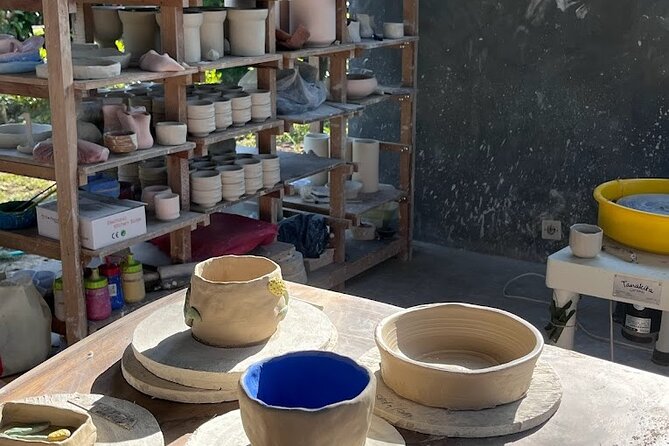
At $31.31 per person, you’re paying for:
- a guided pottery class
- 2kg of clay
- roughly 3 hours of instruction and making
That’s good value compared to many Bali activities that are basically a show plus a short activity. Here, your time is spent doing the craft. The fact that you often make two pieces (commonly one by hand and one on the wheel) also helps justify the cost—because you’re not just leaving with a single small item.
There’s also a quality signal in the class style: it’s guided by mentors who teach from the basics and help you understand how the methods work. That instruction is what turns a fun afternoon into a skill you can carry (even if you only use it once later).
The rating is 4.7, which lines up with the overall tone of the experience: fun, informative, and friendly.
Bottom line: at this price, it’s a strong pick if you want hands-on creativity rather than just photo stops.
Who this Ubud ceramics class suits best
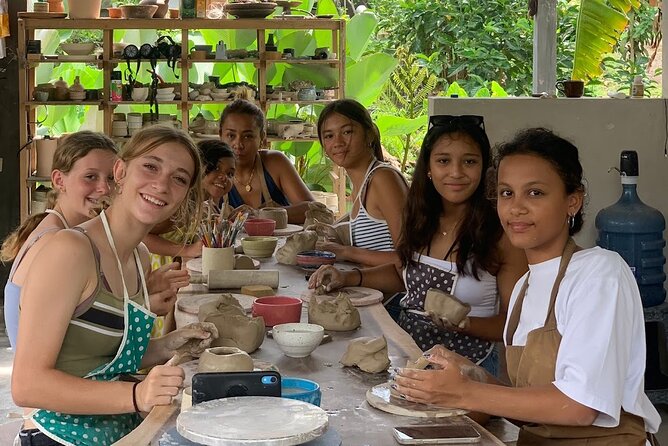
This class is a good fit if you want something active and cultural without being too complicated.
You’ll likely enjoy it if:
- you’re a beginner and want clear instruction
- you want both hand-building and wheel throwing
- you like calm, garden-style settings
- you want a Bali activity you can talk about later, because you made the object
It may be less ideal if:
- you’re short on time and cannot spare the 4-day window for take-home
- you dislike getting messy
- you expect a long tour of sights. This is focused on making, not sightseeing.
It’s also small-group enough that it can work for friends or couples. If you’re traveling with family, the class structure still makes sense because the mentors teach basics.
Quick practical checklist before you go
Based on what’s included and how the session works, here’s what to plan for:
- Bring your questions early. The class starts with basics, and you’ll learn faster if you’re asking while you’re learning.
- Plan your schedule around the 4-day take-home rule.
- Set aside time for the drive from central Ubud. 30 minutes is the rough target, longer with traffic.
- Wear clothes you’re okay getting dirty from clay.
Should you book this Ubud pottery class?
Yes, you should book it if you want a real ceramics experience in Bali: guided, hands-on, and with both wheel throwing and hand-building. The price makes sense for the time and materials, and the small group size helps you get proper attention instead of a one-size-fits-all demo.
Skip it or think twice if you can’t handle the timing for take-home pieces or you want a sight-heavy day. But for an afternoon that trades shopping crowds for creative work with clay, this is the kind of Bali activity that actually feels worth your time.
FAQ
How long is the Ubud pottery ceramic class?
The class lasts about 3 hours.
Where does the class start and where does it end?
It starts at Tana ampo Pottery Studio (Central Singapadu, Sukawati, Gianyar Regency, Bali) and ends back at the same meeting point.
What’s included in the price?
The guided pottery class and 2kg clay are included.
Do I need prior pottery experience?
No. Most travelers can participate, and the mentors teach from the basics.
Can I take my pottery home?
You can take your work home, but the class notes you should have a minimum of 4 remaining days left to do so.
How big is the group?
The activity has a maximum of 10 travelers.
What is the cancellation policy?
Free cancellation is available. You can cancel up to 24 hours in advance for a full refund, and changes inside 24 hours are not accepted.
More Bali Workshops and Classes
- Kekeb Cooking Class at Nusa Dua
★ 5.0 · 33 reviews - Beginner Class Becomes Silversmith With Bali Silver Material
★ 5.0 · 6 reviews
More Days Up in Ubud
- Mount Batur Sunrise Trekking and Rice Terrace Adventure
★ 5.0 · 111 reviews - Wonderful of Ubud Private Guided Tour
★ 5.0 · 78 reviews - Best of Ubud Full Day Private Guided Tour
★ 5.0 · 52 reviews - Bali ATV Ride Ubud Waterfall,RiceField,River,Kingkong-Temple cave
★ 5.0 · 38 reviews - Bali ATV Ride Ubud Waterfall, Ricefield,River,Barong Cave, Lunch
★ 4.5 · 22 reviews
Fresh on the Kuta Travel pages





Ubud & Rice Terrace Day Trips, compared.
 ★ 5.0Ubud Day Tour: Sacred Monkey Forest, Tegenungan Waterfall, Rice TerraceFrom $24190 reviews
 ★ 5.0Bali Ubud DriverFrom $32184 reviews
 ★ 5.0Full Day Kintamani Volcano View and Ubud Village TourFrom $65183 reviews
 ★ 5.0Ubud Adventure All Inclusive Private Day TourFrom $28112 reviews
 ★ 5.0Mount Batur Sunrise Trekking and Rice Terrace AdventureFrom $80111 reviews
 ★ 5.0Ubud Top Tours to Discover Bali’s Cultural and Natural WondersFrom $64106 reviews
 ★ 5.0Ubud Monkey Forest – Rice Terrace – Jungle Swing – Water TempleFrom $3290 reviews
 ★ 5.0Ubud yoga, rice terrace walk and floating Breakfast tourFrom $2585 reviews
Browse the lists this tour appears in